
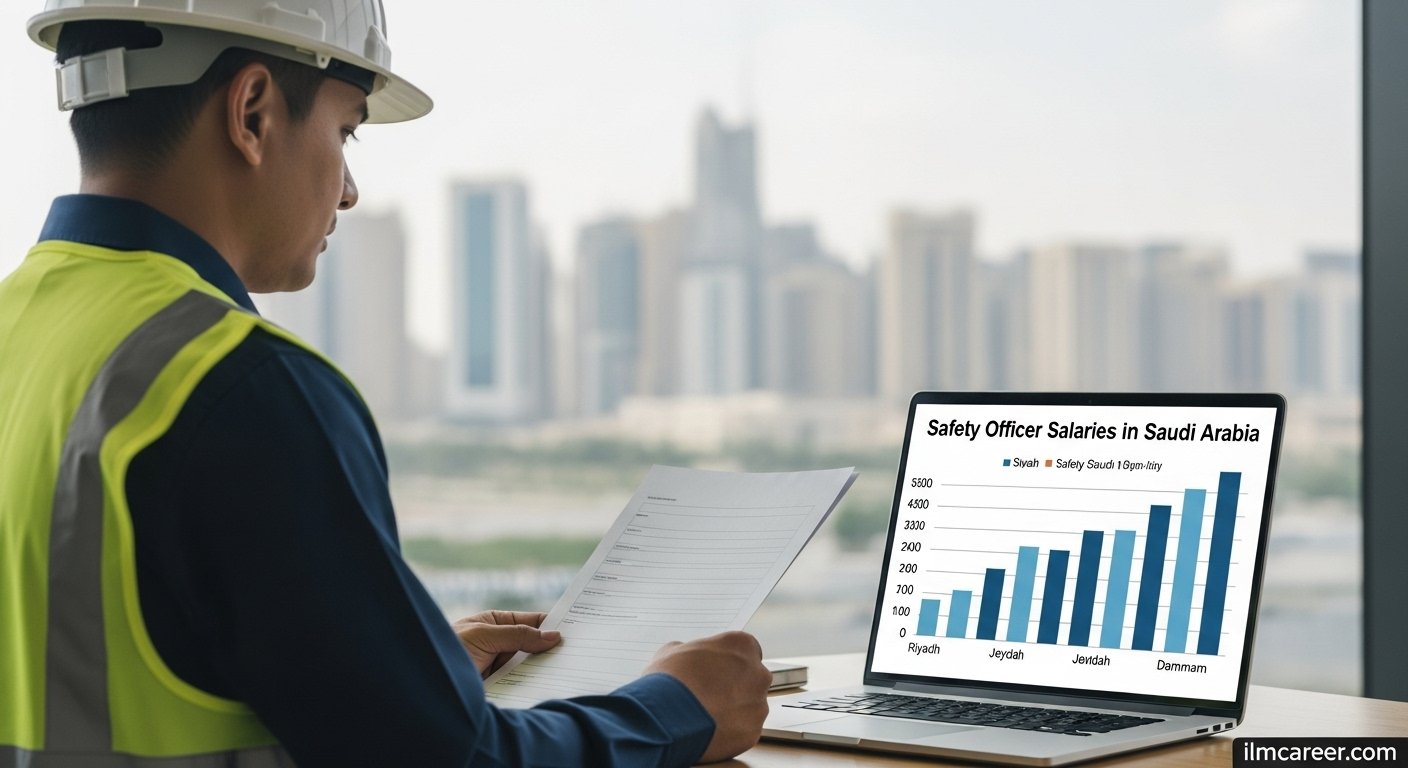
As Saudi Arabia continues to advance its massive infrastructure and industrial portfolio under Vision 2030, the demand for certified Health, Safety, and Environment (HSE) professionals has reached an all-time high. For Pakistani candidates, particularly those holding NEBOSH or IOSH certifications, Saudi Arabia offers a stable and rewarding career trajectory.
This guide provides an authoritative overview of salary expectations, certification impact, and actionable steps to securing your position in the Saudi safety sector in 2026.
Understanding Salary Expectations by Experience and Sector
Safety officer compensation in Saudi Arabia is highly variable, largely dictated by professional certifications, the specific industry (e.g., Oil & Gas vs. Construction), and employer scale.
| Professional Level | Estimated Monthly Salary (SAR) |
| Junior/Fresher | 2,500 – 4,000 |
| NEBOSH Certified (Fresher) | 4,000 – 5,500 |
| Construction HSE Officer | 3,500 – 6,000 |
| Industrial/Jubail Hub Specialist | 5,000 – 9,000 |
| Experienced NEBOSH Specialist | 7,000 – 12,000+ |
| Senior Aramco Safety Engineer | 8,000 – 15,000+ |
Note: Large-scale organizations like Saudi Aramco and SABIC provide additional high-value perks, including family status, schooling allowances, and performance-based bonuses, which significantly exceed standard base salaries.
The NEBOSH Advantage
In the competitive Saudi market, a NEBOSH IGC (International General Certificate) acts as a professional benchmark. Employers in the oil, gas, and petrochemical sectors prioritize candidates who demonstrate a globally recognized understanding of workplace risk management.
- Why it Matters: A NEBOSH certification is often the deciding factor between an entry-level salary and a premium-tier offer. It demonstrates to the employer that you possess the technical knowledge required to maintain rigorous international safety standards.
- Career Growth: Professionals who combine their NEBOSH certification with hands-on experience in HSE auditing or mega-project management often see their earnings double within the first three to five years of their career.
Expert Insights: Navigating the 2026 Job Market
- Strategic CV Optimization: Your CV should not just list duties; it should highlight achievements. Use specific terminology related to risk assessment, incident reporting, and safety compliance. If you have experience with specific software or site-management tools, ensure they are clearly labeled.
- Verification is Mandatory: With the rise in overseas recruitment, you must protect your professional reputation and finances. Always verify the legitimacy of any job opening by cross-referencing the agency or employer with the official Bureau of Emigration & Overseas Employment (BEOE) portal (beoe.gov.pk).
- Target High-Growth Hubs: Industrial zones like Jubail and Yanbu are constant hiring centers for safety specialists. Tailor your applications to these regions, where industrial safety requirements are significantly more stringent and salaries are adjusted for technical complexity.
Roadmap for Long-Term Career Success
Securing your first role as a safety officer is the start of a long-term professional journey.
- Continuous Learning: The safety industry moves quickly. Keep your IOSH and NEBOSH certifications active, and consider pursuing advanced certifications in Fire Safety or Environmental Management to diversify your skillset.
- Networking: Join professional HSE associations. Building relationships with other safety professionals in Saudi Arabia is the most effective way to learn about internal job postings and future leadership opportunities.
- Financial Discipline: Use your early earnings to build a professional foundation. Managing your remittances through secure, government-approved banking channels ensures your savings are protected as you climb the professional ladder.
Frequently Asked Questions (FAQs)
Q: Is 3,000 SAR a competitive starting salary?
A: It is an entry-level benchmark. While sufficient for single status, most career-focused professionals utilize their initial role to gain the necessary Gulf experience, which serves as a springboard to higher-paying positions in energy or petrochemical firms.
Q: Which sector offers the most career stability?
A: The Oil & Gas and petrochemical sectors consistently offer the highest stability and compensation packages, provided the candidate holds advanced international certifications.